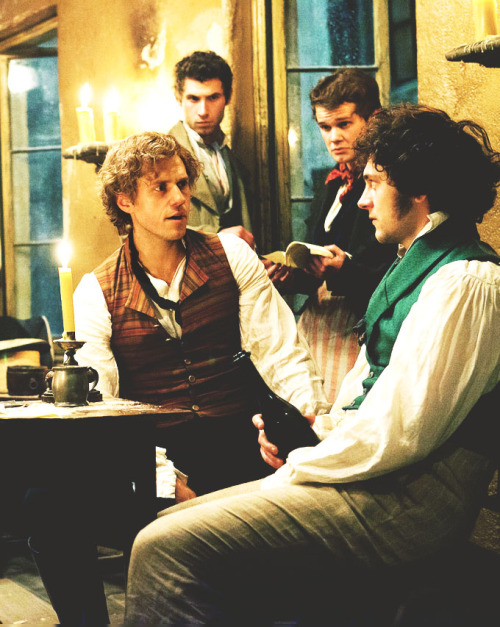
Tuesday, 12 February 2013

Reviews - Films of January 2013

Here are the movies I watched in January:


People Like Us
(watched at home on 4th January 2013)

Watching this film cemented something in me that I have been coming to terms with for a while - I kind of like Los Angeles now. I used to HATE it, and in a lot of ways I still do. A lot of it is ugly, dry, dusty. They don't look after their old art deco buildings. The roads are all broken. The kind of arid scenery they do have - palm trees, canyons and so on, I don't find appealing. The culture is strange. It's extremely difficult to get around it without driving, and I don't drive. The fact that everyone else does drive means that there are not many places designed for traversing by foot, nice places to walk around. The public transport is very limited and kind of scary, and there's barely anywhere that you can hail a cab. It is the opposite of New York and if there is a word stronger than 'opposite,' apply that to London. However, somehow, just by passing through over the last five years, I have discovered pockets, things scattered around the city, that I actually do enjoy, and since my most recent trip to the USA in July, my mind keeps treacherously wandering to these places and somehow, against my own will, I find myself wishing I was back in Los Angeles. Sitting in Intelligentsia in Sunset Junction after purchasing several bags of hand-made salted caramels at the Silver Lake Cheese Store. Shopping at Amoeba, drinking at the Cat and Fiddle, watching a Disney classic at El Capitan Theatre. The Los Feliz Farmer's Market on Sundays, where we bought local honey from a blind man and the best brownie in the history of creation from another stall. The stretch of Vermont that counts as Los Feliz is probably the most pleasant and civilised stretch of street I've found in all of  LA, except maybe down in Santa Monica, which is a whole other type of civilisation, shamefully taking 90 minutes to reach on public transport if you're coming from Hollywood. Santa Monica Boulevard in West Hollywood, ending up in the VIP loft at the Troubadour. The beautifully maintained entrance hall at Union Station. Griffith Observatory, for the Tesla coil demonstrations, the coyotes and the sunset. Paramount Studios, not only because they make some of the best TV and movie, but for the glory of Old Hollywood and how carefully that has been preserved. Even the shopping complex of Hollywood and Highland, if you ignore all the people in costumes - the mosaic artwork in the plaza telling the anonymous stories of those who've made it in LA and the outrageous lies or dodgy tricks the took to get there.

Los Angeles is a true character in this movie, in a way that reminds me of all the things I like about it. It would be nice if I had Chris Pine to drive me around in a shiny Mustang, though - I am sure I would start to love it in that scenario. Chris Pine, Chris Pine, Chris Pine. Is there anything he cannot do? If you do not like him, you are wrong. No arguments. You are wrong. He is wildly, wildly talented. His range as an actor is extraordinary, I have seen nearly every film he has made, they're all different, every character is vastly different, from “blind dude in a rom-com” to “neo-nazi punk in an action film” and he just always manages to elevate whatever he is doing to some next-level shit. If he is in a film, he will make the film good, even when the film should be bad. Even when the film is “Just My Luck.” He has a special quality about him, he is a masterful actor, and I am in love with him. He looks like a frat-boy ken doll and has an English degree from Berkeley. He is genius-levels smart and it shows in his work, particularly with dialogue – nothing he ever says sounds unnatural or like an affectation. He is amazing. He is perfect. However, this film, People Like Us, is a film about family relationships – about him as a brother who finds out about his secret half-sister as an adult, and about him as a son, dealing with his mother after his father dies. The iconic Michelle Pfieffer plays his mom, and Elizabeth Banks, who is sharply, sharply intelligent, plays the sister, and the result of putting Chris Pine up against women who are just as smart and talented as him means that their chemistry is off the charts – in a way that's a little inappropriate for family relations. To be fair, this may have been intentional – it's certainly part of the plot with the sister-who-doesn't-know-she's-his-sister, but even at the end, after the inevitable shitstorm, and he's begging her to let him be her brother, it still feels intrinsically romantic in some way. Like, it's just that intense, there's just that much chemistry, and you don't generally see family members talk to each other like that. God, he is good with Elizabeth Banks, they need to be in more things together, because I have seen him act against a lot of people and I have never seen him work better against someone – well, maybe Quinto, but this was something very unique. The sister's son, Chris's character's nephew, was also a fucking gift, one of the most talented child actors I have ever seen, and his interactions with Chris were priceless. The kid's name is Michael Hall D'Addario and I am going to be keeping an eye on him because he was genuinely brilliant. Everyone in this was brilliant, honestly, including the surprise appearance by Mark Duplass, and the magical Olivia Wilde, but that trio of Chris, Elizabeth and the child was something that I bet film-makers do ritual sacrifices in the hopes of finding. All in all if you like things that are good, you should see this movie. It had a smallish budget, which it didn't even make back at the box office, but was clearly a labour of love – it was made by Alex Kurtzman and Roberto Orci, who co-produced Star Trek, and it was based on true events of Kurtzman's actual life. It is quite an odd film, quite startling, but it is genuinely very good, and really, honestly, nothing like any other movie that I have seen in a long while. I couldn't define it. It just is, and what it is is good.


Anastasia
(watched at home on 4th January 2013)

This was, by no means, of course, the first time I have watched this film. It is my favourite animated movie, far surpassing anything by Disney, and I have felt that way since I first saw it, which would have been at the cinema, sometime between 6th and 7th grade. I remember knowing I wanted to see it and asking a friend to come with me, and I remember the vague feelings of shame, or like I had to “convince” her or talk her into coming to see a cartoon. I can't remember if this was unfounded or not, like whether she readily agreed or whether I actually did have to beg her, but I remember feeling like I might need to because at that time, I was under the impression that people our age did not go to see cartoon movie without little brothers or sisters or whatever. This was something that followed me through most of high school – perhaps there were groups of people out there not giving a shit, but I cannot remember, as a teenager, anyone having any fondness or respect for “children's” things, like animated movie, Disney, etc. I know that I was invested in some afternoon television animated series, like The Animals of Farthing Wood and Madeline, at an age that was deemed “too old” and, again, had to make excuses about it. Aria and the Simpson were okay, but not stuff meant for actual children. I secretly read and enjoyed books that were considered “too young,” as well. Something I have noticed in the current day and age, in fandangos, on tumble, etc, is the stigma of all of this has melted away. This can only be a good thing. I have a lot of gripes with tumble as a random medium and the way it has spread the idea of certain subcultures to a much wider audience, some of whom really don't know how to behave, but I will say this – I have to hand it to the younger generation of kids who seem to no longer have any shame about hanging on to childhood – adults reading YA books, teenagers crying over Disney films, Avatar: The Last Airbender, and Adventure Time. There seems to be a much more widely spread acceptance of all forms of entertainment and art, that people aren't ashamed or dismissive about appreciating things simply because of the recommended age bracket. I bet Harry Potter had a lot to do with that, and, as I said, the fact that “geek culture” and random behaviour is becoming less of a subculture. When I was in early high school, like, the four Goth kids in the corner would have had a Livejournal, at my all girls school. Nowadays, for better or worse, it seems like millions of kids have Tumblr, people make friends at school via Team StarKid references, and all that. I don't know. Maybe this was always happening, in some way, and I just knew the wrong people. But it does seem like there is a higher percentage of young geeks out there now, readers, lovers of culture, people who just like good stuff, and if I was twelve nowadays I wouldn't have had any shame in asking someone to come see Anastasia with me.

So yes. It's my favourite animated film, and on this re-watch, I think I figured out why. It's tonally so different to Disney, which I already knew, of course – it's really dark, really messed up, Disney would never tackle this kind of thing, though Hunchback gets really dark, for them – but the characterisations, as well. Now, we all love our Disney princesses, and there are strong women among them, in their own ways – Belle, Jasmine, Megara – but it isn't until you get to Mulan that you get a hardcore BAMF. And Anya, in Anastasia, is an absolute BAMF. She takes no shit, she is just so fucking cool, and she doesn't have to run away and pretend to be a guy to do it. The way she sasses Dimitri, constantly, is incredible, and the bit on the train where he's expecting her to hand him an axe and she hands him the dynamite? Also, in the end, she saves herself, and him, from Rasputin, which, yes, sort of happens in some Disney, but this is better. It helps that I am also obsessed with the lives of historical royalty, particularly the children of revolutions, because it's always super-sad and messed up. I have read countless, countless historical novels/diaries about people like this – the Tudors, Jane Gray, Marie Therese of France... so yes. Anastasia's story has always fascinated me, and I love how tough she is in this movie, because she was, she was a little terror. I've always been a little curious why they messed with the ages – she was aged 8 in 1916, in the movie, when in reality she would have been 14. They could have kept her as 14, and then had her meet Dimitri ten years later, at age 24? That's not super old, is it? Though maybe they wanted the audience – of children – to relate to a child, in the first scenes, and then when she gets kicked out of the orphanage it's at the “legal adult” age of 18. Whatever. I pretty much wept through the entire film on this viewing, god, the bit in “Once Upon A December” where she dreams of all the dancers and then her father cuts in and she bows to him? Kill me now. Also, the bit on the stairs at the opera in Paris, when Dimitri sees her in that dress. I want that damn dress. Someone make me the dress. I still don't completely understand the ending – why does she have to elope with Dimitri? Why, as a dethroned empress, can she not just marry who she wants and still be publicly acknowledged? She could totally grant him a title. But I just love them, I love the way they talk to one another, I love the way their faces are animated. The animation style has always been a big thing for me, it's a touch more “real” than Disney's, they look like real people, and Anya is just so gorgeous and feminine without being totally delicate. Like, they somehow make her look slightly out of place in her formal gowns, even though she looks amazing. Something about the way they've done it makes you just feel that she's wearing this as a costume, no matter how good it looks, as opposed to, say, Belle, who is equally at home in the blue pinafore or the yellow ball gown. This movie just feels, and has always felt, exceedingly natural to me, and I love that about it.

I also love the songs. So much. There have been rumblings about a Broadway adaptation of this movie for a long time and they actually did a reading/workshop of it in the middle of last year. Aaron Tveit read as Dimitri and I swear to God if he doesn't actually do the role if/when this thing makes it to stage, I will build a fucking barricade outside his house because I will just die if he doesn't do it after knowing he has been attached in some way. He would do this role flawlessly. His range is amazing, particularly as a screen actor, but as a Broadway romantic lead he tends towards flamboyance in a way that – for his Fiyero, for example, I didn't love – but that is perfect for Dimitri. Dimitri is a fucking drama queen, he throws his hands up, he swings his hips when he walks. I can literally see Aaron moving the way Dimitri is animated in the movie, I can visualise it, and his face looks right, his lovely nose and his voice is right. PLEASE give this to me, world. If it comes down to it, I wouldn't mind Darren doing this, of course, he would kill it, too (though they'd need a rather short Anya to match him) but Aaron is the Dimitri of my dreams and I am not just saying that because of Les Mis, but because I am a Broadway stan. Groff could do it, but he doesn't the right mix of innocence to his face – he either looks totally smarmy or totally sweet. Dimitri is a con-man, but not properly- much like Frank Abagnale, the role he originated in Catch Me If You Can, so there's that. Anyway. If Aaron does this role, I will be fucking flying to see the initial run of this when it is released (it will be Europe, maybe West End, but tipped to actually premiere in St Petersburg) and as a matter of fact I may still do that regardless of who is cast, because I want to see this show so, so, so much. Oh my GOD, you know who could totally do it? Jamie Parker.

I'm a little afraid about the music – they're allegedly only using five songs from the movie and adding 15 more – and I've stressed out over which movie songs they may cut. I have assessed that they HAVE to keep Rumour In St Petersburg, Journey To The Past, Once Upon A December, In The Dark Of The Night, and Learn To Do It, but I cannot imagine them omitting At The Beginning, even though it was a pop single/the credits song, because it was such a big hit. Rumour In St Petersburg is one of the best establishing numbers I have EVER seen in a musical, FYI, and the flawlessness that it will be on stage will be worth the cost of my plane ticket to wherever the show runs. I AM seeing this, when it happens, I will not miss the initial run of this show.

There is not a single person whom I know of who I can picture playing Anya, but I am sure she is out there somewhere.

Les Miserables
(watched at cinema on 11th January 2013)

Yes, again. I have a rip of the DVD screener sent out for the awards-show circuit, so there are certain bits that I have seen way too many times now, but I will be going a couple more times to the cinema before it leaves, and I will do a final assessment post about it then, because the feels, they keep on coming. For this viewing, I went alone, I sat in the front row, and I spilled popcorn all over the floor.

Hitchcock
(watched at cinema on 29th January 2013)

I know nothing at all about Alfred Hitchcock, but the trailer impressed me and basically, I love biopics. I tend to get invested in people via their story, rather than objectively by their work (see: The Libertines, the Pre-Raphaelite Brotherhood, Oscar Wilde) – that is not to say, whatsoever, that I don't like their work objectively, or that there aren't many creators of whom I simply like the work, and don't know about the person behind it, but if I know someone's story, and it moves me, I get really, really, really invested in them, and the point is, I don't think I have ever actually seen a Hitchcock film, but it did not stop me wanting to see this movie, because it looked interesting. It was interesting, however, the way that Hitchcock was portrayed as rather sad and sympathetic confused me, as I had had the distinct impression that he was quite awful. Apparently this was not an unfounded impression, and that in this movie he was altogether too nice. There was a HBO biopic of him released last year as well, which apparently went too far the other way, I read an article saying "...Hitchcock was depicted in his twin biopics as either a charming but troubled genius or a monstrous sexual obsessive..." neither of which are probably completely true. Helen Mirren was, of course, awesome, as was Toni Colette who played their assistant – Toni Colette is possibly my favourite actress ever and she and Helen Mirren, as a team, gave this really cool dynamic of power. I also loved ScarJo as Janet Leigh, and I am not usually ScarJo's biggest fan. It was interesting to watch the film-making process, like to see them editing reels by hand – god, that job must have been so incredibly hard – and there is stuff I still can't work out whether is true or not, like Hitchcock taking the knife and doing the stabbing himself while filming “the shower scene” of Psycho. I was also not 100% sold on the whole thing of Hitchcock being followed around and haunted by Ed Gein – I do not think that happened to him in real life, and I am not sure what it added to the picture. The other thing I kept thinking about was the Hitchcocks' massive and beautiful house and the fact that they seemed to not have any staff – like that they just cooked for themselves and ate in the eat-in kitchen of this giant mansion. Understandable later in the film, when they start cutting expenses, but the entire way through, they lived a very small life in a very big house and it was just something I kept wondering about. Perhaps that was true and was just a lifestyle thing. Anyway, I liked the film well enough, but it had some serious oddness about it. Fun Fact: I saw this in the exact same cinema that I saw the above showing of Les Mis, and I knocked the popcorn over again. However, I was not as fail as the woman sitting behind me, who was having the loudest and stupidest reactions that I have ever heard from someone in a film audience. Oh my god, she was hard to tolerate.

Rise of the Guardians
(watched at cinema on 30th January 2013)

This was a really creative and interesting movie that I had been keen to see due to the animation and the voice actors. This film is based on a book series but set around 200 years after those books take place, and I would be quite interested in reading those books, the origin stories of each of the Guardians. The lead character is the figure of Jack Frost, the spirit of winter, and aside from being crush-worthy gorgeous, he is voiced by the amazing Chris Pine, whom I waxed lyrical about earlier. The concept of all the elemental spirits was quite unusual, particularly their version of the Tooth Fairy – and the Sandman, of course, when compared to my dear Dream King – but it was really nice world-building. It was a cute, and sad story, with a pretty scary villain. Jude Law scares me at the best of times, and his character was definitely causing some childhood trauma to the rest of our audience. Some parents can't gauge their kids' reactions very well, because there were children there scream-sobbing the entire way through. That was somewhat off-putting. But the movie had some really, really funny bits – North's (Santa) stuff was all really, really funny and he may be my new favourite Santa of all time, kudos Alec Baldwin for that. If you have seen it, the bit where he was marching along on the spot excitedly with the elves? I died. And I loved the rest of them trying to do Tooth's job when all her fairies were trapped. Jack, of course, was lovely and sassy and gorgeous and sad, and I’m sure the film-makers thought they were putting in a slight implication of him and Tooth getting together, but dude, I was shipping the hell out of him and Hugh Jackman's Easter Bunny. There was one bit, where Jack pretends to fall off the sleigh, and Bunny's reaction, where I was like “dammmmn.” Yeah, it's a giant anthropomorphic rabbit, so what? Tooth is mostly hummingbird. They're elemental spirits, I'll ship who I want. Okay, wait, I've checked AO3 and people totally ship it. Good to know it's not just me being weird, I haven't been this relieved at “not being the only freak shipping this” since I discovered that no, it wasn't just me, the major ship in Little Miss Sunshine IS Dwayne/Frank. Oh my god, that movie is intense and if you do not vibe that ship there is something wrong with you, honestly. Look at me, bringing cross-generational incest into my review of a children's movie! Keeping it classy as always. Anyway, I am not someone who goes into anything – particularly not children's movie - wearing slash goggles – if I vibe something I vibe it, I don't set out to start shipping people – so the fact that I vibed it in this means that it must be legit. Amirite? Probably not. Oh well.

Coming up... February so far:
Eurotrip
The Silver Linings Playbook
Looking For Alibrandi
The Castle

Sunday, 6 January 2013

Review: Pitch Perfect - ACAMAZING

Pitch Perfect
(watched on 2nd January 2013)

 I know that Pitch Perfect has been out for months in the USA, but it has only been in cinemas for a few weeks here. I knew it was going to be good, but oh my god, it was one of the funniest films I have seen in a long time. There were some flaws that stuck out to me - firstly, although Aubrey's regime for the Bellas is clearly crap, it would have been nice if they had kept the "we only do female songs" aspect because, you know, girls. Secondly, it felt a bit unfinished - like that maybe there were sub-plots that were meant to happen and that got cut, but they left the set-up in there to meander out? I'm thinking the stuff with Freddie Stroma, Aubrey's daddy issues, some of the Amy/Bumper stuff (the "Why do you have Bumper's number? " "Ummmmm... ahhh.. ummm.." and also some of the Chloe stuff - I've heard that the movie was meant to go to a Beca/Chloe place and that they changed it, and it felt like a LOT of set-up was done for that and then they just decided to literally change it half-way through filming. It felt like the reveal of "who's a lesbian" was meant to be this, like, unexpected twist as Chloe, but then it wasn't? I don't know, was that a thing?

Regardless of that, though, I can't believe how involved I got in the film - like, just sheer delight at the musical numbers - there were a few where I literally wanted to (and did, quietly) applaud, or wanted to (and did, quietly) sing along. And the most unrestrained laughter I have had in a cinema in a very long time, I think everyone in my group ended up sliding out of their chair at some point. Rebel Wilson, my god, the whole audience was dying, most of us with the added aspect of actually understanding exactly how awful and un-PC her Australian references were (they were bad, you guys, reallllllly bad) and also having grown up watching her on Pizza, which was, side-note actually filmed on location in a store right down the road from my old house and school. But seriously, "sometimes I have the feeling I can do crystal meth, but then I think, mmm... better not." This, in context, absolutely murdered me, as did everything Elizabeth Banks said. And Anna Kendrick was great, she has always been great, I have loved her since I saw sing "Ladies Who Lunch" in her first movie, Camp, at the cinema. If you have not seen this film, run, don't walk, run and see it NOW, it is absolutely everything Glee wishes it could be about performing arts students, it is one of the best films of all time. She's just so natural and cool.

Skylar Astin is a prince, and a brilliant Broadway baby, and I loved his character and would like to date him myself, though I would have been okay with Jesse and Beca being BFFs and the film actually going to a Beca/Chloe endgame, seeing as Beca complained about movies having predictable endings in a way that made me think there would be more of a twist. But dude, when she was singing "Don't You (Forget About Me)" at the end, and I realized a heartbeat before it happened that he was going to do the Judd Nelson fist-pump KILLER. Also, when this happened, my friend Francesca was crying, I mean like... glasses fallen off, full on weeping. I have never seen her cry more in my life, she assures me she has when watching things in private, but I have never seen her cry like that in front of people or watching a movie. And while I was not sobbing like her, I do understand the sentiment.

But yeah. It was just all so damn cool, and engaging - both the initiation party scene and the riff-off were so totally awesome and vibed really realistically, in regards to those kind of communities and college parties. Also, if you look closely, one of the song topics on the riff-off spinning wheel was "songs ruined by Glee," which, lol forever. By the end, that final Trebles number, the Cee Lo/B.o.B one, I was like, finger-pointing and seat dancing and not even pretending not to sing along. Basically, plot-holes aside, this was a bloody brilliant music-related film, with some extremely fresh writing, and I want to watch it again pretty much right now.

Saturday, 5 January 2013

Twenty Thirteen: a prize for the most awkward-sounding year.

It's a new year (it's a new day, it's a new dawn, it's a new liiiiiife) and while I'm not really one for doing things purely because it's a certain date or a social norm, I am in the process of trying to change some aspects of my life in general, so I guess that I do have some "resolutions."

I hope to:

- do some sort of physical activity or exercise twice a week
- take a vitamin tablet every day
- do a water-as-my-only-beverage day once a week

- watch at least one movie per week
- read at least one book per week
- write/document every book or movie, even if it's just one paragraph
- re-read Les Misérables cover-to-cover, at least one chapter per day
- watch the entirety of Lost without looking up any spoilers

- start learning to drive
- complete scrapbooking/photo albums of 2009 - 2012 events and travel
- visit a country that I've never been to before, that isn't a Western culture, and survive my eating problems
- visit my family in Israel

- write and post a physical letter once a fortnight
- make one video blog per month
- write one personal blog post per week
- make a new friend in the "physical space"
- find a new activity or unique day out in my city once a month

So yes. I need to get a new diary and calender in order to cross things off, like the vitamins, or make some sort of checklist. Christmas was ehhhh. The hype does not thrill me, and large social gatherings of family whom I either have to "explain myself" to or avoid make me quite anxious. I hope you all had a nice time. I was delighted to receive a StarKid fan-made shirt in this style from my Hypable Secret Santa. I was also sent an epic Not Another Teen Wolf Podcast stenciled tote bag and a hand made Teen Wolf charm pin by my crafty friend Courtney (who is definitely the greatest addition to my heart that 2012 gave me.) My housemate Francesca gave me a Wills and Kate Christmas card, which is definitely a keeper, and the four of us in our house had a small Christmas party in which we went to the zoo, then came home and watched Elf and Love Actually.


(A photo (of a photo) of people who love giraffes (who love giraffes.))

On New Year's Eve, we went out at midnight and watched the fireworks over the city from the hill at our train station. It wasn't the full show, it was about nine awkward locals standing around in silence on a traffic island together, but whatevs. We actually spent most of the evening at home having drinks and watching Big Fat Quiz of the Year 2012, which was amazing. Lobstromonous, even. The best BFQOTY since maybe 2007, or even 2006, (the first one I saw, back when I was living in London) - fuck, have I fucking mentioned how much I fucking love British comedy and all these people? Because I do. A lot.


Since 2013 has existed, I have:

- had a panic attack over the fact that Tyler Hoechlin is just currently chilling somewhere in my city, like no big deal
- tediously spent around 16 hours editing a podcast
- watched Pitch Perfect (at the cinema) and People Like Us (at home) - reviews coming tomorrow
- finished the first book in Tamora Pierce's Immortals quartet, which I am re-reading for the 762nd time because my friend Mark is reading and writing about them on his blog

- not been able to stop thinking about Les Mis in some format for approximately 20 of the 24 hours in any given day, I mean seriously we're talking about anything from comparing the various cast recordings and loving how the film has thrown back to the original 1985 London cast in regards to tone and delivery; to remembering more canon included that I forgot to mention here, like Marius threatening to blow up the barricade; to dipping in and out of the book (mainly Les Amis, I won't front) and recalling what an actual lolrus Victor Hugo was, how funny, snarky and distinct he made these ten boys ("Here lies Blondeau, Blondeau the Nose, Blondeau Nasica, the ox of discipline, bos disciplinae, the bloodhound of the password, the angel of the roll-call, who was upright, square exact, rigid, honest, and hideous. God crossed him off as he crossed me off.") and how much more horridly tragic it is when they all die so specifically; to mapping out a walk described in the book by comparing a map of 1830s Paris to current Google Maps and finding out what streets changed names; to wondering why no one has made some sort of graphic set incorporating the Frank Ocean verse of "No Church In The Wild" with stills from the film; to trawling Youtube for bootlegs and trying to work out how much book/stage-show/movie crossover there is (and deciding that the director and cast of this period of the West End run really have the right thing in mind when it comes to Enjolras and Grantaire, damn; to theorizing how, because of above hilarity, snark and distinct characterisation, that if the BBC or HBO did a miniseries just about Les Amis, about their formation as well as Eponine and Marius's friendship, and the few years lead up to the June Rebellion - if viewers got to know these bromantical boys, with their nobility and their sass, that it would be complete and utter fandom fodder and then they'd have to open a support phone-line to deal with the results of the finale in which all the people you love are KILLED HORRIBLY AND SPECIFICALLY, not in one big shoot-out as per the musical. So yeah. That's mainly been my 2013.

Today, however, was a little different. Everyone in my house had a day off, so I took them to two different Eastern Suburbs swimming locations. I'm not a fan of the Eastern Suburbs, it's a very snobby and rich area, the kind of young people who choose to live there are not generally the kind of people who would mesh well with the kind of people who live in the Inner West, like me, and it's very difficult to get around as far as transportation goes. I mean, I even grew up on the North Shore, which is VERY upper middle class, and I went to a Catholic private school. Eastern Suburbs private schools make my school look like Waterloo Road. But the area has great swimming.

These aren't coastal beaches, like Bondi or whatever you might be familiar with. These are within Sydney Harbour, so much more sheltered. The first is a private beach at the bottom of the gardens belonging to a public historic house:


After a couple of hours here, we moved down the road a little bit to Murray Rose Pool in Double Bay, which was called Redleaf Pool when I was a kid. This is a huge harbor pool with facilities: showers, a cafe, and most importantly, things to jump off of.


There was much leaping to be done, off the pier fence boardwalk, and off the floating pontoons.

Also, at this pool. a tiny little girl, around three years old, made her mother tell me she liked my swimsuit. I looked down and the kid had literally exactly the same swimsuit as me - a one piece in the same exact print - and I did not know whether to feel complimented or humiliated. Oh well.


Hmmmmm.

Saturday, 29 December 2012

Review: Les Miserables - To Love Another Person Is To See The Face Of God


So, I saw Les Misérables. Twice, actually. I saw it on 22nd December, at a midday advanced screening session which may have literally been the first public screening in Australia, and then again yesterday.


I won't spend a huge amount of time explaining what this show means to me. I will say that I have seen it onstage about seven or eight times. This includes professional productions (in Sydney, 1997 and in London, in 2006 and 2007) as well as school and local productions. I have seen the 10th anniversary concert DVD over twenty times, the 25th anniversary concert at the cinema. I have read the book, and seen the non-musical films (the 2000 miniseries with John Malkovich is the best in my opinion) and I have listened to the soundtrack literally hundreds of times (again, 10th anniversary cast = best cast.) I will say that I know every single breath of the show as a musical, every word, that it is my favourite musical, that it changed my life, that it was probably what drew me into being passionate about music as a medium in general, and that it – extending to more musical theatre – would be the reason why songs that are stories mean the most to me, in any genre. So yeah. Les Mis is kind of a big deal for me. This movie coming out – kind of a big deal for me. It had the potential to be the best or worst thing that has ever happened to me, and, good news, I'm currently leaning towards best!


God knows how many times I'll end up seeing it. When I worked at a video store, I used to put the 10th anniversary concert DVD on every weekend shift. When my brother was in the ensemble of a production of it at his school, I ended up going three times – and spoiler alert, it wasn't because I was proud of my brother or anything. Sorry, brother.


Anyway, I have to write about my feels. The first part of this will be general, about different aspects of the movie/musical, and then the end part – which is long – explains my feelings on a certain aspect/certain characters in the book-canon who are my favourite and my babies and the amazing way the film has used the book as a resource to actually show some of that in a way that the musical is usually too simplistic to be able to focus on.


So, first off, the leads:


Hugh Jackman as Valjean – was fine. He was not bad at all, and I especially liked the Soliloquy/What Have I Done as well as Who Am I. He managed the live-singing aspect really well in these, the pacing and the emotion. His quiet breakdown whisper on “I feel my shame inside me like a knife” will be sticking me for a long time, as will his delivery of “yes Cosette, forbid me now to die” in his death scene at the end. But Valjean just never moves me that much anyway though? I know he's the lead and whatever, but he just isn't the focus for me. I have heard Hugh Jackman talk about this live-singing process and how it means that you're not limited to the traditional song structure or whatever – that he had the freedom to go from speaking to singing, from quiet to loud, power, whispers, making acting choices with the singing delivery as opposed to delivering a formally structured song performance, and he definitely did well in this aspect.


So did Anne Hathaway, who was flawless perfection as Fantine, a character I usually ignore. She genuinely used to bore me and I never cared for I Dreamed A Dream. But wow, wow, wow. She was the best, just the best. That live-singing-making-acting-choices thing? That aspect worked better for her than for anyone else, she was the best at making the medium work. She was just amazing, beautiful. I never thought much about her as an actress, just never gave her that much thought, until I saw her onstage in 2011, doing a reading, at an event hosted by Joseph Gordon-Levitt, and she just blew me away then, as a stage performer. It's her medium, I don't want to say she's wasted in film, exactly, but she kind of is, and while this is obviously film as well, she was using stage-acting qualities and this just made me want to see her on Broadway. Of course, film has the added benefit of doing face close-ups, and while this was something over-used in the movie (I will get to gripes in a little bit) for her it worked, the horror of her getting fucked by the sailor client, the single-shot take of I Dreamed A Dream, and the close-ups of her delirious, happy, dying craziness... yeah. She was something else. I was so reluctant about Anne Hathaway for the longest time – since 2001, when I stamped my foot and said “she is NOT my Princess Mia!” and proceeded to not forgive her, for ten years. I can safely say – Anne, you are more than forgiven. I'm sorry.


Apologies are also in order for Mr Russell Crowe. When this casting was announced I was just absolutely like “Nope. No. Terrible.” I don't know why I was so objectionable about it – I think it was that I knew his singing voice isn't the traditional booming powerful voice that Javert generally has, and also that he isn't harsh enough, that he didn't seem stern and cold and brutish enough. Yeah, I eat my hat. Because he wasn't those things – he wasn't – but he was something better. He gave Javert this real nobility – not the harsh righteousness that you automatically want to oppose, but this vulnerability that was almost close to Asperger's or OCD. He reminded me, uncontrollably in some ways, of Sheldon Cooper, the way he played Javert's single-mindedness. I found myself finding him sweet, even, like in the scene where he comes to report to Monsieur Madeleine – Valjean, after he's rebuilt his life, saying he's there to serve – it was almost like an eager puppy, and again later when he comes to admit that he thinks he's done wrong by Madeleine and asks Madeleine to press charges against him because he feels that he deserves it. He isn't a hypocrite, and he sees the world in black and white. His singing wasn't that strong, honestly, and it struck me the first time I saw it, but by the second, I didn't mind it – and the lack of boom and power suited his version of Javert anyway. I cannot believe what brilliant character work he did, it seems I was forgetting that Crowe has two Best Actor Oscars. I was intrigued even by his movements, his weird precision, his pacing the edge of the roof in Stars, a metaphor for his faith, and his movements fighting Valjean in The Confrontation. The Confrontation in general was staged perfectly and was one of the best moments of the film. And then, when he joined the revolutionaries undercover, you could see it, you could see him starting to have his values shaken, to start to see the grey areas, even before Valjean frees him. The most emotional part of the movie – the part where I broke down and sobbed, I mean really sobbed, couldn't stop, was a wordless moment too detailed to be in the musical and, to my recollection, wasn't in the book either, and it's when Javert is observing all the bodies laid out, of the revolutionaries, and he passes over Gavroche, crouches down, and pins his own valour medal on him. I fucking lost my shit. It was the most beautiful thing they could have done, I wasn't expecting it, and I have tears dripping again just writing this. So yeah. I loved his Javert, even if he isn't the greatest Broadway-style singer I have ever witnessed.


The Thénardiers – were well cast - I usually greatly dislike Helena Bonham Carter, but she was great for this, she really was - and performed well, but it was all done a bit too lightly. Bits of Master Of The House were TOO much comic relief in a way that just didn't suit the rest of the movie's tone. In the musical, Lovely Ladies can also be a funny-ish number, but here it wasn't, it was sinister, so Master Of The House should have been a little more sinister as well. Most of it was okay, but some of it was just a bit too stupid, and that goes for their appearance at the wedding as well.


Cosette – both Isabelle Allen (baby Cosette) and Amanda Seyfried made her a lot less simpering and a lot stronger than how she's done in the musical. Amanda especially – I mean she wasn't exactly a tough rebellious woman, but she had enough independence, enough strength of character, pushed Valjean enough, for me actually to be offended on her behalf when Valjean and Marius are keeping things from her “for her sake.” Usually I just find her wishy-washy and annoying and getting in the way of one of the saddest and most beautiful OTPs ever, but I hated Amanda's Cosette much less than any other Cosette.


MariusEddie Redmayne gets ALL THE AWARDS. God. He'd never sung before doing this film? He was so, so good. He has something, that kid, he is always so interesting to watch, and again, Marius is usually kind of a dumb drip. He was way more enigmatic than most Mariuses I can remember seeing, and I can't believe how good he sounded – not flawless, not the most traditional tone, but strong and interesting and just, yeah, he was great. I know that all Les Amis de l'ABC,  including him, sat with the director, Tom Hooper, and drew a lot from the book-canon for all their characters, and they crafted a wonderful Marius. I'm glad he got the role and he truly deserved it, even though people were screaming for it to go to a Broadway veteran. Apparently he's been obsessed with the show since he was seven years old and it legitimately inspired him to start acting in general, and yes, good, yes.


Samantha Barks as Eponine – oh, Eponine, my dearest, dearest girl- was perfect and criminally underused. For some reason – I'm going to go out on a limb and say 'they were on crack,' they cut several of her best dialogue-y scenes – her first long back and forth with Marius, that really paints the picture of their relationship – they kept, like, one line; and also the awkward introduction, by Marius, of her and Cosette as adults.. but what she did have was perfect. On My Own wasn't the traditional ingénue belting it out to the back of the room, it was her crying into her knees, and A Little Fall Of Rain – oh, man. That's the song that literally took me years not to cry in even on the cast recording. I will always cry every time I see it staged, but I used to cry every time I even heard it. It was beautiful, and the film included the book-canon aspect of her directing the soldier's gun to shoot her, rather than her just getting picked off while climbing to Marius. Ughhh, that poor girl. I swear to God, if anyone has ever come out of Les Mis actually shipping Cosette/Marius instead of wishing that Cosette would go away and Marius realise how amazing Eponine is, you are doing it wrong.


Daniel Huttlestone as Gavroche was another flawless part of the film – sometimes Gavroche can be a bit of a snotty, arrogant brat, too sassy, too Artful Dodger, and not, to me, all that likable. This version was perfectly balanced and adorable and you loved him and Les Amis loved him and he died horribly and even Javert loved him. I desperately want to get a TARDIS, go and get Javert and Gavroche, and have Javert run off with him and raise him in a caravan, like Bruce Willis and the kid in Moonrise Kingdom.


Aaron Tveit as Enjolras was a prince, he was poetry in motion, the rest of Les Amis were marvellous, especially George Blagden as Grantaire and Fra Fee as Courfeyrac, and you could tell they were truly feeling it in all their amazing group numbers, and there's about 3000 words to follow of my Barricade Boys feelings, so strap yourself in.


Before we get there, though: some gripes and some loving mentions:


There were a couple of aspects of the film I didn't love: there were too many close-up shots. Yes, I get that they wanted to show off their live singing and do single takes and make a big deal of that but you didn't need to do it for the entirety of every solo. Some performances suffered from it. It worked for Valjean's Soliloquy  I Dreamed A Dream, and On My Own – even On My Own didn't need it. Everything else could have been less close-up-in-your-face. Empty Chairs at Empty Tables, especially – not that Mr Redmayne couldn't sing it, not that he needed the takes, but the performance would have been better and more moving if we'd panned around, if we'd had flashbacks of the rest of his friends, all that kind of thing. I can't believe I'm saying this, but more montages were needed? This could be said for a few of the songs that just lingered on the singer's face. The movie had such a huge and grand scope, yet they spent so much time right up here in your face – often with quite strange framing, due to the fact that they may have got a perfect singing take from a less than perfect camera angles. So yeah, the group numbers really stood out for me as stronger.


They also did this thing, a couple of times, which I did not understand at all, which is where they would change a bit of random wording from the original for no purpose that I could tell? Like, the musical came first, I am not sure why they changed words to fit the film, surely they should be building the film around the words? One random one that stands out was Bamatabois, “Javert, would you believe it, I was crossing from the park...” and in the film “Javert, would you believe it, I was lost here in the dark..” like.. why couldn't he be crossing from the park? They could have put a park there? Another was just a word change of the Bishop, saying “I have saved your soul for God” instead of “bought your soul for God” - the imagery of saved rather than bought paints kind of a different picture to me, because for the whole musical Valjean considers the entire thing a sort of bargain.


Also, the new song, Suddenly. Look, it was actually sweet, and I know they want the Best Song Oscar and to be eligible for that you need an actual original song, but like... I'd have rather have gotten more Eponine/Marius flirting, or Grantaire's verse of Drink With Me, or the full Attack On Rue Plumet. I know they filmed EVERYTHING, and Tom Hooper's original cut was nearly 5 hours long, and there is just stuff I would have rather seen than that new song which I have zero investment in.


This length issue/cutting issue also leads to my final problem with the movie, which is that some cuts were made in odd places – cuts that messed with the flow of a song, or didn't complete a rhyme. It was quite jarring, as was a thing they did a few times in which they would change the order of dialogue in a song, which again messed with the rhyme and flow – for example “come on ladies, settle down, I run a business of repute, I am the mayor of this town” was changed to “come on ladies, settle down, I am the mayor of this town, I run a business of repute..” and the transition was really awkward? And less than 5 minutes later they had it again, with the Runaway Cart and the line goes, from Javert as he speculates on the Mayor reminding him of Valjean: "forgive me sir, I would not dare.." and Valjean saying “Say what you must, don't leave it there!” and in the musical these lines are switched? Like Valjean says his first? I get why they did it – because in the song, Javert then goes to sing about his explanation of the criminal Valjean, and they don't do that immediately in the movie – Javert comes to him later. So they can't end the scene with Valjean saying “say what you must, don't leave it there” and then Javert just... not saying anything.. but the flow of it doesn't work well.


However, all these issues were things that jolted me on my first viewing, because I had all the exact wording of the musical in my head. On my second watch, it was very easy to just go with it, gloss over it, and get used to it, and I can only imagine these issues will go away even more each time I see the film again and get to know it as its own permanent entity.


Um, Colm Wilkinson (the original Valjean) cameo as the Bishop, every hardcore Les Mis fan would have been crying at that; scenes/staging that I adored: At The End Of The Day was incredible, the women working with Fantine, the foreman, and the fact that Valjean sighted Javert and that's why he didn't stick around to help – I always raise my eyebrow a bit, in the stage show, where he comes in and is like “what's all this? You fix it,” for pretty much no reason. I liked the re-structuring of some of the songs, like changing the order of I Dreamed A Dream/Lovely Ladies/The Runaway Cart – the new structure worked PERFECTLY for the storytelling medium of film. At first I was a bit taken aback by the change of Do You Hear The People Sing – usually they go straight into it from Red and Black, but in the film they do Red and Black, they have all of Marius and Cosette's meeting (In My Life/Heart Full Of Love), On My Own, and One Day More before doing Do You Hear The People Sing, and I am sat there going 'where is it?' But they do it the next morning, at General Lamarque's funeral parade, as an initial movement of rebellion and protest, and the effect of it is absolutely chilling and by that moment, I knew, I knew that this whole thing could have disappointed a lot of people, it could have all gone wrong, but it wasn't going to, that this was right, this was the best, because there is literally no way to top how they did that scene. The finale of Valjean watching the reprise of Do You Hear The People Sing on the gigantic barricade, with all the honoured dead, is also so grand and beautiful that I have never envied actors more than I envy the people who got to be a part of it.


I also love how much book canon they were able to use. LOVE it. I have already mentioned a few moments, but others that stand out include the removal of Fantine's teeth, the fact it was Christmas Eve when Valjean fetches Cosette as a child, Fauchelevant taking in Valjean and Cosette at the convent, the elephant statue Gavroche lives inside, and a lot of details about the Cafe Musain and the goings on of that time, including actual details of the June Rebellion, such as the funeral parade. There is so much more, I haven't read the book since high school and am in the process of going through it again now, but those are just a few I remember.


But for me, because I'm me – the most important book-canon aspect and the most interesting relationship in the story is that between Enjolras and Grantaire. If you've seen the musical, you know who Grantaire is, even if you don't know you know – he's the one always shown to be drinking and messing about. He's the one that teases Marius about falling in love with Cosette and encourages him, in order to goad Enjolras, and he's the one with the incredibly cynical second verse in Drink With Me: ("will the world remember you when you fall?/could it be your death means nothing at all?/is your life just one more lie?") In the book, however, it is so much more detailed: Grantaire is a sceptic and a cynic, a hedonist and an alcoholic, he's brilliant, witty, funny, he doesn't believe in the revolution, in their common cause, he isn't honourable, he thinks Les Amis de l'ABC are wasting their time. However, he stays with them, he keeps coming to meetings – even when he interrupts said meetings with poetic and distracting monologues; he keeps asking for tasks to be assigned to him, even when he fucks up and does not fulfil them. He canonically calls himself R, because Grantaire sounds like grande r – capital R in French, and so does Les Mis fandom, and so shall I. So why is R still hanging around the Cafe Musain, when all he does is get drunk, drop truth-bombs, and mock people? Enjolras. R is pretty much in love with Enjolras – not because he believes in Enjolras's ideas, but because he believes in the boy himself.


From the text:

Still, this sceptic had fanaticism. This fanaticism was not for an idea, nor a dogma, nor an art, nor a science; it was for a man: Enjolras. Grantaire admired, loved, and venerated Enjolras. To whom did this anarchical doubter ally himself in this phalanx of absolute minds? To the most absolute. In what way did Enjolras subjugate him? By ideas? No. Through character. A phenomenon often seen. A sceptic adhering to a believer is as simple as the law of complementary colours: that which we lack attracts us. Nobody loves the light like a blind man. The dwarf adores the drum major. The toad is always looking up at the sky. Why? To see the bird fly. Grantaire, crawling with doubt, loved to see faith soaring in Enjolras. He needed Enjolras. Without understanding it clearly, and without trying to explain it to himself, that chaste, healthy, firm, direct, hard, honest nature charmed him.

Instinctively, he admired his opposite. His soft, wavering, disjointed, diseased, deformed ideas hitched onto Enjolras as a backbone. His moral spine leaned on that firmness. Beside Enjolras Grantaire became somebody again. On his own, he was actually composed of two apparently incompatible elements. He was ironic and cordial. His indifference was loving. His mind dispensed with belief, yet his heart could not dispense with friendship. A thorough contradiction; for an affection is a conviction. This was his nature. There are men who seem born to be the opposite, the reverse, the counterpart. They are Pollux, Patroclus, Nisus, Eudamidas, Ephestion, Pechméja. The live only on condition of leaning on another; their names are sequels, only written preceded by the conjunction "and"; their existence is not their own; it is the other side of a destiny not their own. Grantaire was one of these men. He was the reverse of Enjolras.

We might almost say that affinities begin with the letters of the alphabet. In the series O and P are inseparable. You can, as you choose, pronounce O and P, or Orestes and Pylades.

Grantaire, a true satellite of Enjolras, lived in this circle of young people; he existed within it; he took pleasure only in it; he followed them everywhere. His delight was to see these forms coming and going in the haze of wine. He was tolerated for his good humour.

Enjolras, being a believer, disdained this sceptic, and being sober, scorned this drunkard. He granted him a bit of haughty pity. Grantaire was an unaccepted Pylades. Always treated rudely by Enjolras, harshly repelled, rejected, yet returning, he said of Enjolras, "What a fine statue!"

------

So yeah. R is obsessed with Enjolras to the point where Victor Hugo makes all these allegories to the Ancient Greek homoerotic figures – Enjolras's introductory pages compare E himself to Antinous, Aristogeiton and later in the text, to Apollo – and here, E and R as a pair are painted as Achilles and Patrocles, Alexander and Hephaestion, Euryalus and Nisus, and of course, Orestes and Pylades, the last of which becomes very important later. The thing is, this is a “two-halves-of-the-same-whole” allusion, not a “close friends” allusion because they are NOT friends. If we were talking about the best BROTP in nineteenth century Paris, we'd be looking at Enjolras and Combeferre, who very much calms E down - ("The Revolution was more adapted for breathing with Combeferre than with Enjolras. Enjolras expressed its divine right, and Combeferre its natural right. The first attached himself to Robespierre; the second confined himself to Condorcet. Combeferre lived the life of all the rest of the world more than did Enjolras. If it had been granted to these two young men to attain to history, the one would have been the just, the other the wise man.")


Grantaire is barely even tolerated by Enjolras, but he loves that E believes in himself, even when R lives to tease him about that very fact (though not really, remember, an affection is a conviction.) He loves that E believes in people being good, being righteous, because he thinks that the human condition sucks so badly, and he can't make himself not believe it, but he wants so much to be wrong. He wants Enjolras to be right. They are tied together, by love, fate, whatever – something different to logical convictions. Alexander and Hephaestion, Orestes and Pylades, Enjolras and Grantaire, but Enjolras won't accept the connection. But R keeps hanging around, just to be with E. Enjolras, whose character is made pretty obvious even in the simplified musical, “was a charming young man, who was capable of being terrible.” He's very noble, he has incredible convictions, he is the spark. Without him, the boys would just be sitting around saying “wouldn't things be better if...” and many of them were really just kids playing adult games right up until they died.


But Enjolras was the real deal, harsh, true to his convictions, and, in a way, totally naïve. ("He chastely dropped his eyes before everything which was not the Republic. He was the marble lover of liberty. His speech was harshly inspired, and had the thrill of a hymn. He was subject to unexpected outbursts of soul.") I mean the way he reacts to Marius falling in love with Cosette is basically the same as, on Teen Wolf, the way Derek reacts every time Scott is distracted by or prioritises Allison, he's like “I don't have time for your teenage shit, Marius, ugh, I'm so above this” but it's actually because he's so naïve and repressed that doesn't know how to open himself up at all. There is a bit (in a chapter called “Wherein Will Appear the Name of Enjolras' Mistress”) where the other guys – not even Grantaire, just some of the boys - are teasing about Enjolras and discussing how he could possibly be so passionate – the kind of crazed bravery usually inspired by love of a woman. “He is not in love, and yet he manages to be intrepid. It is a thing unheard of that a man should be as cold as ice and as bold as fire." E overhears this and mutters “Patria.” - homeland. So yeah, Enjolras is in love with France. He's that guy.


ANYWAY, the volumes of the book focusing on Les Amis de l'ABC feature quite a few scenes of Grantaire's dedication to Enjolras, and trying to win his approval. There's a bit, where E is trying to send people out to different neighbourhoods  to spread the gospel of Enjolras or whatever, and because Marius is off chasing Cosette, E finds himself a man short. R is like “hey, what about me? I can do it!” and E is like “what the fuck, YOU? Er, no.” Let me post you the dialogue here:


"I have to have somebody for the Barriere du Maine. There’s nobody left."

"Me," said Grantaire, "I’m here."

"You?"

"Me."

"You to indoctrinate republicans! You, to warm up, in the name of principles, hearts that have grown cold!"

"Why not?"

"Can you be good for something?"

"I have a vague ambition in that direction," said Grantaire.

"You don't believe in anything."

"I believe in you."

"Grantaire, do you want to do me a favour?"

"Anything. Polish your boots."

"Well, don't meddle in our affairs. Sleep off your absinthe."

"You're an ingrate, Enjolras."

"You'd be a fine man to go to the Barriere du Maine! You'd be capable of that!"

"I'm capable of going down to the Rue des Grés, of crossing the Place Saint-Michel, of striking off through the Rue Monsieur-le-Prince, of taking the Rue de Vaugirard, of passing the Carmelites, of turning into the Rue d'Assas, of reaching the Rue du Cherch-Midi, of leaving behind me the War Ministry, of hurrying through the Rue des Vieilles-Tuileries, of striding through the Boulevard, of crossing the Chaussée de Maine, of crossing over the Barriere, and of entering Richefeu's. I am capable of that. My shoes are capable of it."

"Do you know anything about those comrades at Richefeu's?"

"Not much. We're on good terms, though."

"What will you say to them?"

"I'll talk about Robespierre, by God. About Danton, about principles."

"You!"

"Me! You don't do me justice. When I get going, I'm formidable. I've read Prudhomme, I know the Contrat Social, I know my constitution of the year Two by heart. 'The Liberty of one citizen ends where the Liberty of another citizen begins.' Do you take me for a brute? I have an old assignat in my drawer. The Rights of Man, the sovereignty of the people, ye gods! I'm even a bit of a Hébertists. I can repeat, for six hours at a time, watch in hand, superb things."

"Be serious," said Enjolras.

"I'm fierce," answered Grantaire.

Enjolras thought for a few seconds and gestured like a man making up his mind.

"Grantaire," he said gravely. "I agree to try you. You'll go to the Barriere du Maine."

Grantaire lived in a furnished room quite near the Café Musain. He went out and came back in five minutes. He had gone home to put on a Robespierre waistcoat.

"Red," he said as he came in, looking straight at Enjolras.

Then, with the flat of his huge hand, he smoothed the two scarlet points of his waistcoat over his breast.

And, going up to Enjolras, he whispered in his ear, "Don't worry."

He jammed down his hat resolutely and went out.

-----

So yeah. You get the picture. R will do anything for E if E wants him to do it – especially if it's E that asks him specifically, not just a general part of going along with everyone, but he still is a major sass-monster right to E's face, and it is all very amazing and tragic. Later, E goes to check on R's progress and finds him at du Maine, playing fucking dominoes with the people he'd been sent to convert. What's weird is we don't get a reaction to this – the chapter ends with E just watching the scene play out and the dialogue of the game, no chastising of R, no resolution, resignation or confrontation. (Because of this, I like to imagine that R was winning them over in his own way, by drinking and playing with them and slipping things into conversation, and not that he simply got distracted and failed. But it is R, so unfortunately he probably did just fail.)


On the day of the revolution, Grantaire is having some breakfast wine with some of the others and they get a messenger from E. R is a sulky baby because E sent the message directly to one of the others and not to him. ("Enjolras disdains me," he muttered. "Enjolras said: 'Joly is ill, Grantaire is drunk.' It was to Bossuet that he sent Navet. If he had come for me, I would have followed him. So much the worse for Enjolras! I won't go to his funeral." HAHAHAHAHAHAHAH no.) So basically he switches from wine to liquor and gets shitfaced while the others prepare to fight. Because the boys are basically still idiots, they end up building the barricade outside their wineshop, and when Enjolras arrives there, he tries to send Grantaire away, to sleep off his booze somewhere else, because, in E's opinion, R is “dishonouring” the barricade. E telling him off totally makes R shut down, stop fighting and sassing him, and he quietly begs to be allowed to stay there with E, to just sleep in the corner.

-----

Grantaire, keeping his tender, troubled eyes fixed on him answered, "Let me sleep here -- until I die here."

Enjolras stared at him disdainfully.

"Grantaire, you're incapable of belief, of thought, of will, of life, and of death."

Grantaire replied gravely, "You'll see. You'll see."

-----

R then passes the fuck out and sleeps through. The. Entire. Thing. He sleeps through the whole final day of the battle, through the barricades all falling. The National Guard chase off the students, the revolutionaries, and they box them up like rats in a trap inside the cafe, shooting at them through floors, which opens the chapter titled Orestes Fasting and Pylades Drunk – I told you that would be important! The last one left alive is Enjolras, they know he's the leader, and they corner him, defenceless and beautiful, in an upstairs room. He throws aside his broken gun and offers himself up to their guns honourably  and his nobility kind of chills everyone into silence, to the point where they don't want to do it. They lower their guns a bunch of times. They ask him if he wants his eyes bandaged, he says no. They ask him if he's sure it was him who killed their artillery sergeant, he says yes. “Perhaps it was of him that the witness spoke who said afterward before the court-martial, "Three was one insurgent whom I heard called Apollo." A National Guard who was aiming at Enjolras dropped his weapon, saying, "It is as though I'm about to shoot a flower."


When the room goes quiet, as the Guards are holding back from shooting E, R wakes up. “Noise does not rouse a drunken man; silence awakens him. The fall of everything around him only augmented Grantaire's prostration; the crumbling of all things was his lullaby. The sort of halt which the tumult underwent in the presence of Enjolras was a shock to this heavy slumber. It had the effect of a carriage going at full speed, which suddenly comes to a dead stop. The persons dozing within it wake up. Grantaire rose to his feet with a start, stretched out his arms, rubbed his eyes, stared, yawned, and understood.”


So what happens then? He comes over, unnoticed, and as the Guards are preparing to shoot again, he calls out to stop them. "Vive la République! I'm one of them. Count me in."

-----

He repeated: "Long live the Republic!" crossed the room with a firm stride and placed himself in front of the guns beside Enjolras.
"Finish both of us at one blow," said he.
And turning gently to Enjolras, he said to him:
"Do you permit it?"
Enjolras pressed his hand with a smile.
This smile was not ended when the report resounded.
Enjolras, pierced by eight bullets, remained leaning against the wall, as though the balls had nailed him there. Only, his head was bowed.
Grantaire fell at his feet, as though struck by a thunderbolt.

-----

So, yeah. He wakes up, realises what the fuck is going on, and basically has no interest in living in a world without Enjolras, or in letting E die alone. He won't die for E's cause, but he will die for E himself, with E accepting him, holding his hand, smiling at each other.


ISN'T THAT JUST LOVELY AND CHEERFUL. So yeah. I don't think I need to really explain WHY this is just the most asnbdhvvdsmnjkjkqwg of relationships? If you have a soul and good taste, you ship, or at least, are intrigued, by E/R. I mean it isn't exactly subtle, especially in a 19th century religious novel. But yes. Where were we. Oh yes. The musical and the movie.


With the musical, a good director, who knows the book-canon, knows how to stage the Grantaire stuff – there are certain parts of songs/Enjolras's lines that should be directed TO him, and certain parts in group numbers that he must be the one to sing, including, of course, the bitter, cynical verse of Drink With Me. A director or actor who knows Grantaire knows how to basically play up this relationship, and the movie really does do that. Even though some of it was cut, I've read the script and there were a lot of stage directions pertaining to the E/R connection – ones that are still apparent are mainly, of course, in Red and Black, where Grantaire is mocking the shit out of Enjolras, incensing Marius while giving E these sassy-as-fuck looks because he KNOWS what Marius's mooning is doing to E. And then E sits Grantaire down and sings the “it is time for us all to decide who we are” at him and kind of chides him, which is the correct direction that verse should be taking – some lesser productions have E direct that bit at Marius, and it shouldn't be – it's directed at R, and then becomes all-encompassing to the group. The movie stages it perfectly, and later, in One Day More, Grantaire's reaction shot didn't make it in, but the stage direction on E's line of “will you take your place with me?” is 'from top of stairs, for Grantaire’s benefit' and then 'Grantaire rather reluctantly goes upstairs.'


And then. And then. The death scene. See, the thing is, in the musical, they don't really do the "Orestes Fasting and Pylades Drunk" scene. It's too complex, the show is too simple, and they basically just have all the boys get shot down on the barricade, including Grantaire. Enjolras dies last, always, and the traditional way it's done is that he falls, lying on his back hanging down the barricade, his red flag streaming out below him like blood. It is one of the play's most iconic images. This may be a good time, or a weird one, to mention that I actually wanted to call my first son Enjolras, for about five years in my teens, until I realised that it may be cursing him to a life of dismay in more ways than one.


Anyway. The movie. It does the book's death scene, and it ended me. The killing of the students is a lot more raw, visceral, less noble than in the traditional musical. They realise they've lost, they run, they try to get to safety, and the people of Paris, the ones they were trying to save, close their doors to the students. They get boxed in, they get shot through the floors, and Enjolras is cornered, alone, in the upper room. They don't do the dialogue, but Grantaire comes in, stops them, says “Long Live The Republic!” and then crosses the line to take his place beside Enjolras. E hoists the flag he still has wrapped around his fist, and they are shot together, die together. They're in front of an open window, so Enjolras does get his traditional stage-musical death shot of being splayed upside down with the red flag, but still. I NEVER expected the movie-musical to include their real death scene with this much thought into what it meant. Ever.


It turns out both Aaron Tveit and George Blagden, E and R respectively, used and became obsessed with the book-canon of their characters, both together and in general, and used it as a terrific acting resource. It really, really shows. Aaron has spoken about it in a couple of interviews, and George is extremely active on Twitter, is pretty much a shipper himself, and possibly doesn't know what he's getting himself into with fandom. But he tweets things like this:


That moment when consciousness returns to the drunk man who then realises he is about to lose everything he ever cared about in this world.


I mean, thanks, George, really. Thanks for that. I'll just go cry in a Fortress of Solitude now. It has actually been a really long time since I have seen a screen actor this obsessed with his own character, and his own character's canon. That kind of thing is like crack to me. So yeah, I am drowning in a well of Grantaire feels right now.


This is approximately 7000 words long so common sense dictates that I need to stop. But yes! Les Mis in general gets a big thumbs up from me, and I hope I have traumatised you with information you probably didn't know about one of the greatest (and most canon) queer ships of all time!

Monday, 24 September 2012

Travelling with four of my five senses!


I don't think I'll ever really want to visit anywhere more than I want to constantly go to/be in Britain, however, I don't go to England to travel - I go there to go home.

But in the past couple of years, I've become more financially stable and it looks like I don't have to scrimp and save in order to get back to London. This means I can do MORE travel - if I could only afford one trip, I would choose England every single time, but I may now be able to afford more travel, or maybe do some proper stopovers on the way to Europe.

See, I want to go to some places feel a bit more different than Western Europe and the USA. Here's a list of where I've visited:

UK
Ireland
France
Germany
Austria
Sweden
Denmark
Netherlands
USA
Canada
Fiji
Israel

All of those are fairly 'Western' - Fiji is very resort-style, at least where I was, and Israel has a huge mix of cultures but I've been going there since before I can remember. Most of the stops in Europe were only very short, three days at a time at most, sometimes only one day. I've allegedly been to Greece and Singapore but I was a baby and I don't remember it.

So. While I am genuinely most interested in Europe and the culture found there (as well as the USA and the events/food found there) I feel like I've travelled a lot but am not particularly 'well-travelled.' I work in the travel industry so am constantly exposed and reminded of the existence of thousands of cities and all the unique experiences to be had. I want to do some of that. And I could do some of that. The problem, for me, is food.

Ifyou read this blog post, you'll know I have some eating issues. If you haven't, I suggest you read it as the issues are quite severe.
 I'm terribly ashamed of travelling somewhere with a totally different style of food and having to not eat it, but the fact of the matter is that I just can't. People might say how much I'm missing out, how much it's a major part of the experience... I've heard it all before. I'm sure that's all true... for you. But eating for me isn't that big a deal, because I've had these problems so long that I am used to not experiencing things when it comes to food. I don't often go out to eat with people even at home. I just eat what I can eat to get by, and when there is something I really enjoy, I enjoy the fuck out of it and it's a major luxury. So yes, one day I'm going to go to Naples just to eat their pizza, and I'll go all around Italy eating pizza and bread and being disgustingly gluttonous, and when I was in California I spent $60 on 2lbs of hand-made salt caramels which are a gift from heaven. But I don't NEED that in my travel. I just need to be able to eat enough to survive.

I want to visit places in Asia. Maybe Russia, Eastern Europe at least. Maybe India. South America also, and the West Indies. South Africa, Egypt and Jordan. I have genuinely no idea how easy it is, in many of the places I might want to go, to get simple Western food, which is basically what I need. I'm sorry if it offends you connoisseurs, but that's the situation and I know it means I'll have trouble going 'off the beaten track' and out into the wilds. Don't tell me how much I'm missing. It's not like that. It's how much YOU'D be missing in that situation. Don't project your values onto me.. I have different values about food. Pretend that food was just a meagre thing required to get by, like plugging yourself into a power socket, and I need a particular type of socket.

Can you help me?

I'll list some examples of places that I'd like to think of visiting. If you have anything to offer in regards to what I need, please comment, or Tweet me. (@nataliefisher)

Indonesia
Philippines
Thailand
Malaysia
Vietnam
Hong Kong
China
Korea
India
Sri Lanka
Poland
Russia
Turkey
Poland
Czech Republic
Greek Islands
Croatia
Spain
Egypt
Jordan
UAE (Dubai)
Oman
Southern Africa
Ecuador
Brazil
Argentina
West Indies
Mexico

Here is my question - if you have visited any of these places - or any other places you think I should visit - how easy do you think it would be for me to eat, relatively simply and normally for me? I'm talking more supermarket food than restaurant food. For example, safe fresh fruit/veg I could buy, commercial Western brands I would recognise being sold, or even fast food? I've been to Malaysia - not into the city, just around the airport, and this is a good example - I ate McDonalds there and it was pretty much the same as any McDonalds anywhere. Same goes for Korea. It should be noted that I'm not obsessed with McDonalds, I just happen to have instant trust in regards to them, like I know their world standards so I wouldn't be scared of going and getting some fries and fries are a staple of simple filling foods that I can eat and sometimes easier to get than plain bread, depending on the culture.

Now, I'd be happy to go to anywhere in Asia and experience all the culture, forests, wildlife, history, temples etc. and then go back to my hotel room at night and stuff myself with plain fries, Coca Cola, and a couple of bananas and oranges. I can sustain myself like that, I generally only eat one proper-sized meal a day as it is.

So, friends, tell me - where is this plausible? I imagine somewhere like Bangkok that's no problem, but I'm more interested in northern Thailand and also the islands. I think Bali might be okay? My idea for Asian travel is beaches and forests, wild life, boats, temples, sculpted gardens, serene mountains, local craft, history and culture, markets, etc etc.  As far as Europe goes, I want to go to Gallipoli, I want to see ancient ruins, I want to see beautiful museums and stately buildings. As far as South America, Russia, India and Africa go - I have no idea what might be plausible in regards to my eating.

I know in a lot of these places, the culture may vary hugely from big cities to smaller places. I don't love the idea of big Asian cities, it overwhelms me quite a bit, but I'd stay there and potentially go on day trips out to the slightly more remote places if possible, in order to see what I might like to see and still be able to eat? I could bring my own food on such trips if I'm able to buy it in the cities.

I just want to hold baby tigers AND eat McDonalds, okay? Is that a thing that can happen in my life?

Tuesday, 11 September 2012

Review: Magic Mike - The Stripper Film

So in an attempt to write more - to record more about what's inside my head, and also to help myself learn to write concisely, I'm going to try and write down my thoughts on each movie I watch from here on out - for the next month, 6 months, a year. Some posts will be about the first time I'm seeing the movie, some will be about re-watches. Thrilling. Here goes:

Magic Mike (2012)
watched 1st September, 2012 

first time seeing it

First off: despite the hype, it needs to be stated that there was not a single moment in this movie where I was titillated. I'm pretty sure that was intentional on the part of the film-makers - I mean, I'm certain many men and women who are attracted to men would find this movie appealing and just used it as an excuse to giggle and squeal, but I think that if you went to see the movie through that gaze, you might have missed the actual point of it, and - while I'm sure they helped box office sales - after seeing the film, I'm even more certain that the people who went for the eye-candy were not the intended audience of Magic Mike. 

I was interested in seeing Magic Mike because I'm generally interested in exposure to alternative or taboo lifestyles (even though I'm really prudish IRL, Secret Diary of a Callgirl is one of my favourite shows ever,) and the small snippets of dialogue in the trailer proved to me that this really was a film about that, not a film about looking at men's bodies. 

I found Magic Mike to be really raw, raw in a good way, with very natural dialogue. In the last few years, some films and TV shows have finally actually been able to write words that sound normal, that sound real, that sound like the way people actually talk, and get the actors to deliver them ways that SOUND normal and natural. Do you know how rare that has been? For the majority of Hollywood history, (contemporary British entertainment has always done a lot better on this front, but that's a rant for another day) people haven't actually talked the way they do in real life - even in a 'realistic' movie like a biopic or a rom-com or anything set modern day. There's always been an element of it being thought out, and written, which of course it was, and sometimes that's a good thing because writers have the skill of taking the feelings we want to express and articulating them in ways that we just can't say, especially off the top of our heads. So we turn to quoting things, such as these films, to express what we mean in ways that have already been written for us and resonated with us. 


But lately, in the last 5 years or so - I'm sure older examples exist, but I'm noticing it more and more now - people have actually started making films where the characters talk like real humans, and I find it much more immersive and effective. Even in comedies, where obviously people are funnier than in real life - the film No Strings Attached and the show New Girl (both written by Liz Meriwether) spring to mind. Even in superhero films - the realistic, natural performance of Andrew Garfield just playing a derpy teenager was the best thing about The Amazing Spider-Man. For lack of a better word, certain film-makers are making their films - or at least the dialogue and delivery by the actors, if not the plot - less over-dramatic. And I'm really, really into that. I'm sure some people find it boring, but for me I'm constantly air-punching over it. 

This quality abounds in Magic Mike, particularly in all the interactions between Mike, the lead character, and Brooke, the sister of his young workmate. Sometimes, the conversations are downright awkward, like Brooke doesn't know how to talk to the boys - not in a blushing virgin way, just in a 'I don't know what to talk to you about' way. And that's realistic. She's a medical assistant and her brother and his new best friend are male strippers and they keep hanging out with her. In real life, there would be plenty of moments where, in that situation, the conversation would be awkward. And in a movie, traditionally, people would be cooler and smoother than in real life, and they'd be funny, sassy, snappy and they'd be able to talk because they'd been written that way. However, this film looked at the reality of a situation like this and really seems to have written that reality. I appreciate that.

The plot was interesting enough, and I do like the fact that Channing Tatum pitched this movie involving some of his own experiences as a stripper in order to draw back the curtain on the industry a little. I think it worked very well, and showed a good deal of the behind-the-scenes of this alternative lifestyle - the backstage, the business, the rehearsals, the social interactions from the (possibly expected) drug-fuelled orgy parties to the much more laid back and fun beach trip which could have been taken by any group of workmates and friends who had access to a boat. It did a good job of showing that while the lifestyle did have the expected amount of dirt and glamour, that the people involved are normal. It shows what quick 'fame' or success can do to people, with The Kid going from insecurity to arrogance and then carelessness pretty fast. But I just really liked the character of Mike, I liked his relationship with the psychology student Joanna and how he chose to keep going back to her for hookups rather than taking girls from the bar. It was a sign of his search for something in his life with more meaning, that he wants to trust and befriend people, and that he doesn't take advantage of the 'benefits' of the lifestyle of his job. But it isn't done in a way that makes him some beacon of purity. There's no moment in the film where there's any 'oh, these are my morals, I'm a stripper but I don't do THAT' - he's just a normal and decent guy who pretty much lives by the Wil Wheaton law of 'don't be a dick.' And it's a little painful to see him doing that and for people, like Brooke and the bank manager, to not give him credit for that, or for them to expect him not to be decent.

If I wasn't sure from the trailers, the ending and its lack of resolution made me certain that this was meant to be a pithy film. We don't know what happened to Adam, The Kid, whether he moved on with the club and became the new 'Mike' - he has no real redemption, either. We don't know whether Joanna was engaged the entire time she knew Mike - but I liked that his discovery of the situation hurt him, though, even though his true feelings were for Brooke. It is another example of this man not wanting to feel used and abused, that his job is not his personality and how problematic it is for him when people assume that he feels a certain way because of what he does for work. At the end, he does get Brooke, but that's where we leave them - no resolution regarding his choice to leave the club and the fact he's spent all his money to save the ungrateful Kid. I suppose we're meant to assume he stays in Tampa and finds a way to make ends meet, making furniture and enjoying Brooke, but I was reminded strongly of another Soderbergh film, Erin Brockovich, where the ending is mostly in place but the last scene is Erin approaching the door of her ex, so we don't know the resolution to every issue in the story. There's a pretty decent assessment that the difference between entertainment and art, a movie and a film, is that a movie ends, but a film stops, and if you go by that rule, Magic Mike is a pretty great film. 

Also: tiny tiny pig! I will save you, tiny pig, from Elvis Presley's manic pixie dream girl granddaughter who feeds you drugs and vomit. OMG, if I was squealing over anything in Magic Mike, it was in every moment featuring the TINY PIG.


Next up: Spice World. Yeah.